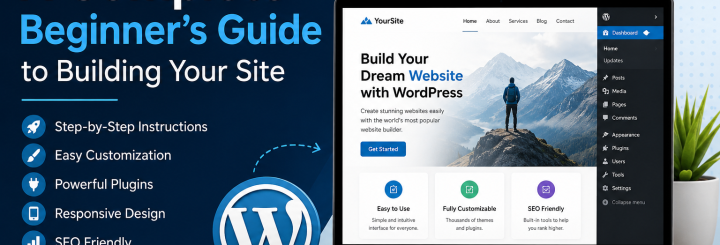
Creating a professional website no longer requires advanced coding skills or hiring an expensive web developer. Thanks to WordPress, anyone can build a functional, attractive, and fully customizable website with minimal technical knowledge. Whether you’re launching a personal blog, an online portfolio, a business website, or an eCommerce store, learning how to use WordPress to create a website is one of the smartest investments you can make.
WordPress powers over 40% of websites worldwide because of its flexibility, ease of use, and thousands of customization options. In this guide, you’ll learn everything you need to know to create a WordPress website from start to finish.
Why Choose WordPress?
WordPress is an open-source content management system (CMS) that allows users to build and manage websites without needing to code everything from scratch. It offers countless themes, plugins, and customization tools that make website creation accessible for beginners while remaining powerful enough for experienced developers.
Some of the biggest advantages of using WordPress include:
- Beginner-friendly interface
- Thousands of free and premium themes
- Extensive plugin library
- Excellent SEO capabilities
- Mobile-responsive designs
- Large support community
- Regular security and feature updates
Whether your goal is to share information or sell products online, WordPress provides the tools needed to grow your online presence.
Step 1: Choose a Domain Name
The first step when you create a website with WordPress is selecting a domain name. Your domain is the web address visitors will use to access your website.
Choose a domain that is:
- Easy to remember
- Short and simple
- Relevant to your business or niche
- Easy to spell
- Unique
Whenever possible, choose a “.com” domain since it remains the most recognized extension worldwide.
Step 2: Purchase Web Hosting
After selecting your domain, you’ll need web hosting. Hosting stores your website’s files and makes them available online.
When comparing hosting providers, look for features such as:
- Fast loading speeds
- High uptime guarantee
- Free SSL certificate
- Automatic backups
- One-click WordPress installation
- Responsive customer support
Many hosting providers offer WordPress-specific plans that simplify the installation process.
Step 3: Install WordPress
Most hosting companies provide one-click WordPress installation. After installation, you’ll receive login credentials for your WordPress dashboard.
Inside the dashboard, you’ll manage every aspect of your website, including pages, posts, themes, plugins, users, and settings.
The WordPress dashboard serves as your website’s control center, making it easy to update content whenever needed.
Step 4: Select the Right WordPress Theme
A WordPress theme determines your website’s appearance and layout.
When selecting a theme, prioritize:
- Mobile responsiveness
- Fast performance
- SEO-friendly coding
- Easy customization
- Regular updates
- Positive user reviews
There are thousands of free themes available, while premium themes often provide additional customization options, advanced layouts, and dedicated customer support.
Remember that a clean, professional design helps improve user experience and builds trust with visitors.
Step 5: Customize Your Website
Once your theme is installed, it’s time to personalize your website.
Common customization options include:
- Uploading your logo
- Choosing brand colors
- Selecting fonts
- Creating navigation menus
- Adding widgets
- Configuring your homepage
WordPress includes a visual customization tool that lets you preview changes before publishing them.
A consistent design reinforces your brand identity and makes your website more memorable.
Step 6: Create Essential Pages
Every website should include several core pages that help visitors understand your business and navigate your content.
These typically include:
Home Page
Your homepage introduces visitors to your website and highlights your most important information.
About Page
Share your background, mission, experience, and what makes your business unique.
Services or Products
Describe the services you provide or showcase the products you sell with detailed information and high-quality images.
Contact Page
Include contact forms, email addresses, phone numbers, business hours, and social media links.
Privacy Policy
Many websites are legally required to have a privacy policy explaining how visitor information is collected and used.
Step 7: Install Important Plugins
Plugins add new features without requiring programming knowledge.
Some essential plugin categories include:
- SEO optimization
- Website security
- Backup solutions
- Contact forms
- Image optimization
- Performance caching
- Spam protection
Avoid installing unnecessary plugins, as too many can slow down your website.
Always keep plugins updated for better security and performance.
Step 8: Optimize Your Website for SEO
Search Engine Optimization (SEO) helps your website appear higher in search engine results.
Basic WordPress SEO practices include:
- Writing descriptive page titles
- Using keyword-rich headings
- Creating valuable content
- Optimizing images with alt text
- Using internal links
- Improving page loading speed
- Creating clean URLs
- Submitting your sitemap to search engines
Publishing informative, high-quality content consistently remains one of the most effective long-term SEO strategies.
Step 9: Make Your Website Mobile-Friendly
More than half of internet users browse websites using smartphones and tablets.
Fortunately, most modern WordPress themes automatically adjust to different screen sizes.
Before launching, test your website on multiple devices to ensure:
- Easy navigation
- Readable text
- Fast loading
- Proper image scaling
- Functional buttons
A mobile-friendly website improves both user experience and search rankings.
Step 10: Publish High-Quality Content
Content is what keeps visitors coming back to your website.
Whether you’re writing blog articles, product descriptions, or service pages, focus on providing useful information that answers your audience’s questions.
Helpful content should be:
- Original
- Easy to read
- Well organized
- Informative
- Updated regularly
Adding images, videos, infographics, and FAQs can further improve engagement.
Secure Your WordPress Website
Website security should never be overlooked.
Protect your website by:
- Using strong passwords
- Enabling two-factor authentication
- Installing security plugins
- Updating WordPress regularly
- Backing up your website frequently
- Limiting login attempts
These simple practices greatly reduce the risk of hacking or data loss.
Monitor Your Website’s Performance
After launching your website, continue monitoring its performance.
Track important metrics such as:
- Visitor traffic
- Page views
- Bounce rate
- Loading speed
- Search rankings
- Conversion rates
Regular analysis helps identify opportunities for improvement and ensures your website continues meeting your goals.
Final Thoughts
Learning how to use WordPress to create a website is one of the most valuable digital skills you can develop. WordPress combines flexibility, affordability, and ease of use, making it suitable for beginners and experienced website owners alike.
By choosing reliable hosting, selecting the right theme, installing essential plugins, optimizing for SEO, and consistently publishing valuable content, you can build a professional website that attracts visitors and supports your long-term goals.
Whether you’re creating a personal blog, business website, portfolio, or online store, WordPress provides everything you need to establish a strong online presence. Start building today, keep learning as you grow, and continuously improve your website to deliver the best possible experience for your audience.
But why bother learning how to make a website? Leave it to the pros and contact TopCrayons today!